Downtown DistrictAlexandria Governorate
Squares & streetsThe Alexandria Tram

Squares & streetsThe cosmopolitan city

The Alexandria Tram

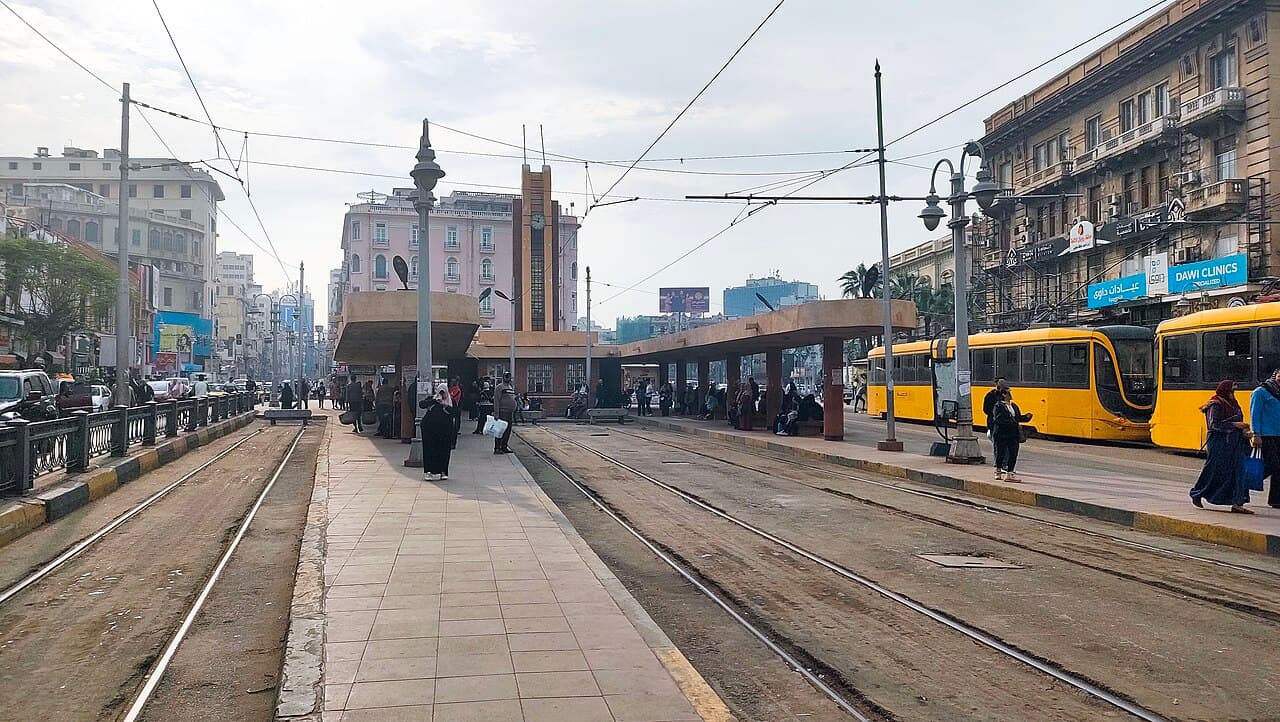
Since 1863, the tram has been part of Alexandria’s transport history. The Raml line has been suspended for its upgrade since 4 April 2026.

The cosmopolitan city
1863
Opening hours
The Raml line has been suspended for its upgrade since 4 April 2026; reopening expected in 2028
Tickets
No tram fares while it is closed; replacement buses run
Administrative section
El Attarin — Mahatet El Raml

What sets it apart

Blue-and-white Raml cars, some with two decks, beside the yellow city trams

6 documented memories

The documentary

The Alexandria Tram — First run: January 1863

Picture and music credits

Picture and music credits

Chapters

  1. 0:34A railway to Ramleh
  2. 2:07The electric age
  3. 3:33The riders
  4. 4:47A line in waiting

Narrated by a synthetic voice (Google Gemini) reading a script written from documented sources. Arabic and English subtitles are in the player’s captions menu.

Its place in time

The cosmopolitan city · 1860 – 1950

The district at the height of its plurality: Greek, Italian, French, Levantine, Jewish and Armenian communities; the tram, theatres, hotels and cafés; classical, Art Nouveau and Art Deco buildings.

Highlights

  • 1The blue Raml line, the oldest
  • 2The yellow city lines, from the late 1890s
  • 3The double-deck cars
  • 4Mahatet El Raml as the starting point

The story

  1. The Raml line began as a railway. In 1860 the Egyptian government engaged the British engineer Sir Edward St John Fairman to build it, and on 8 January 1863 the first train, pulled by four horses, left the station. Steam locomotives replaced the horses that August, and the line went electric in 1903–1904.

  2. The system had two families: the blue Raml line, the older of the two, which ran east from Mahatet El Raml for the suburbs, and the yellow city lines, electric from their start in the late 1890s, serving the inner quarters.

  3. The tram’s history includes double-deck cars on some routes and views of the city from their windows. Read this as a story of transport, and consult the transport guide for alternatives during the upgrade.

  4. The Raml line was partly suspended on 11 February 2026 and stopped entirely on 4 April 2026 for the development and upgrade project run by the National Authority for Tunnels; reopening is expected in 2028, according to the National Authority for Tunnels. Replacement buses and minibuses run along the Corniche, Abu Qir Road (Gamal Abdel Nasser Street) and Bakos routes while the work goes on.

Memories of the place

Every memory is taken from a published, documented source.

  1. 6 August 1860

    The Egyptian government engaged the British engineer Sir Edward St John Fairman to build a railway between Alexandria and Ramleh; the Ministry of Foreign Affairs granted him the concession on 31 October.

  2. 8 January 1863

    The first Ramleh train, pulled by four horses, left the station; in August that year steam locomotives replaced the horses.

  3. 1898Sources differ on this date

    Shortly after Cairo opened Egypt’s first electric tramway, Alexandria acquired a similar network in the town centre. Another account dates its first run to 11 September 1897.

  4. 1903–1904

    The Raml line went electric: conversion began in March 1903, the first electric trains ran on 31 December 1903, and electrification was complete on 25 January 1904.

  5. 6 October 2020

    A restored heritage tram began a daily service, departing roughly every 90 minutes from Saad Zaghloul Square.

  6. 4 April 2026

    The Raml tram stopped entirely for its development and upgrade project; Friday 3 April was the blue cars’ last official day of service. The chairman of the National Authority for Tunnels gives July 2028 as the target for the rebuilt line to start running.

Around it

© OpenStreetMap

Nearby landmarks

Distances are as the crow flies. Choose any pin to open that place.