Downtown DistrictAlexandria Governorate
AntiquitiesRemains of the Alexandria City Wall

AntiquitiesThe Islamic centuries

Remains of the Alexandria City Wall

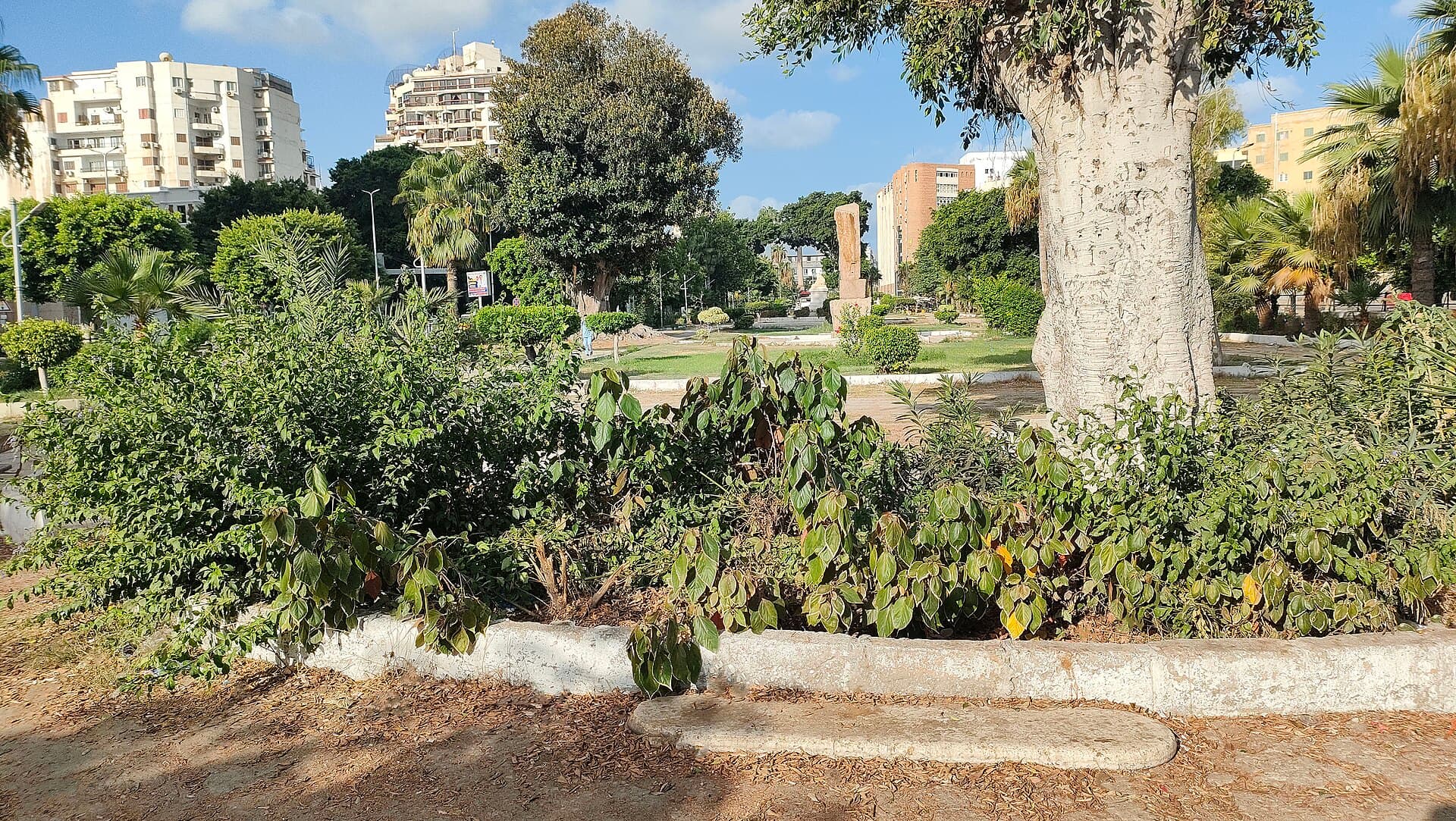
Inside Shallalat Gardens, the remains of the medieval city wall and a surviving tower reveal a chapter of Alexandria’s fortifications.

The Islamic centuries
9th century — under Ibn Tulun
Opening hours
The remains inside Shallalat Gardens follow the garden’s hours
Tickets
Only the garden’s entry fee
Administrative section
Bab Sharqi — near Shallalat Gardens

What sets it apart

Coursed stone masonry and a tall free-standing tower, one of the last two towers of Alexandria’s medieval wall.

8 documented memories

Its place in time

The Islamic centuries · 7th century – 1805

The city contracted within a smaller wall built under Ibn Tulun, its gates later reinforced by the Fatimids and a forward wall added by the Ayyubids; one of its towers still stands inside Shallalat Gardens.

Highlights

  • 1The stone coursing and the wall’s thickness
  • 2The surviving tower
  • 3The wall line inside Shallalat Gardens
  • 4The second surviving tower, at Alexandria Stadium

The story

  1. Alexandria was ringed by walls from its founding. In the ninth century, under Ibn Tulun, a smaller wall was built on a tighter line than the ancient city’s, and it was restored many times afterwards: the Fatimids reinforced its gates and the Ayyubids added a forward wall. The remains standing today belong to this medieval wall.

  2. The clearest survival is a tall, free-standing tower in Shallalat Gardens, which shows the thickness of the build and the coursing of the stone. A second tower, once the wall’s south-east corner, is set into the enclosure of Alexandria Stadium: these are the last two towers of the medieval wall.

  3. This side of the city was associated with Bab Rashid, its eastern gate. The surviving remains help visitors imagine the old city’s limits; they do not mark today’s administrative boundary of Hay Wasat.

Memories of the place

Every memory is taken from a published, documented source.

  1. From the founding

    Like all ancient cities, Alexandria was equipped from its foundation with powerful fortifications against attack by sea and land.

  2. 9th century AD

    Under Ibn Tulun the vast ancient wall was abandoned and a new, smaller wall built, leaving the Serapeum hill outside the city.

  3. 10th–13th centuries

    The Fatimids reinforced the city gates, and the Ayyubids added the forward wall of the defences.

  4. 5 April 1326

    Ibn Battuta reached Alexandria and found it fortified with four gates, among them Bab Rashid and the Green Gate, opened only on Fridays.

  5. 1365

    The raid led by Peter I of Lusignan, King of Cyprus, ravaged the city and destroyed many of its fortifications.

  6. 1818

    The British traveller Sir Henry Light’s view of the Rosetta Gate in Alexandria, from his journey of 1814, was published.

  7. Mid-19th century

    Bastions were added to the eastern curve of the Tulunid wall, the last major modernisation of the defences.

  8. Early 20th century

    The Municipality demolished most of the wall but kept one tower as a feature of Shallalat Gardens; it is one of the last two towers of the medieval wall.

Around it